The first trip
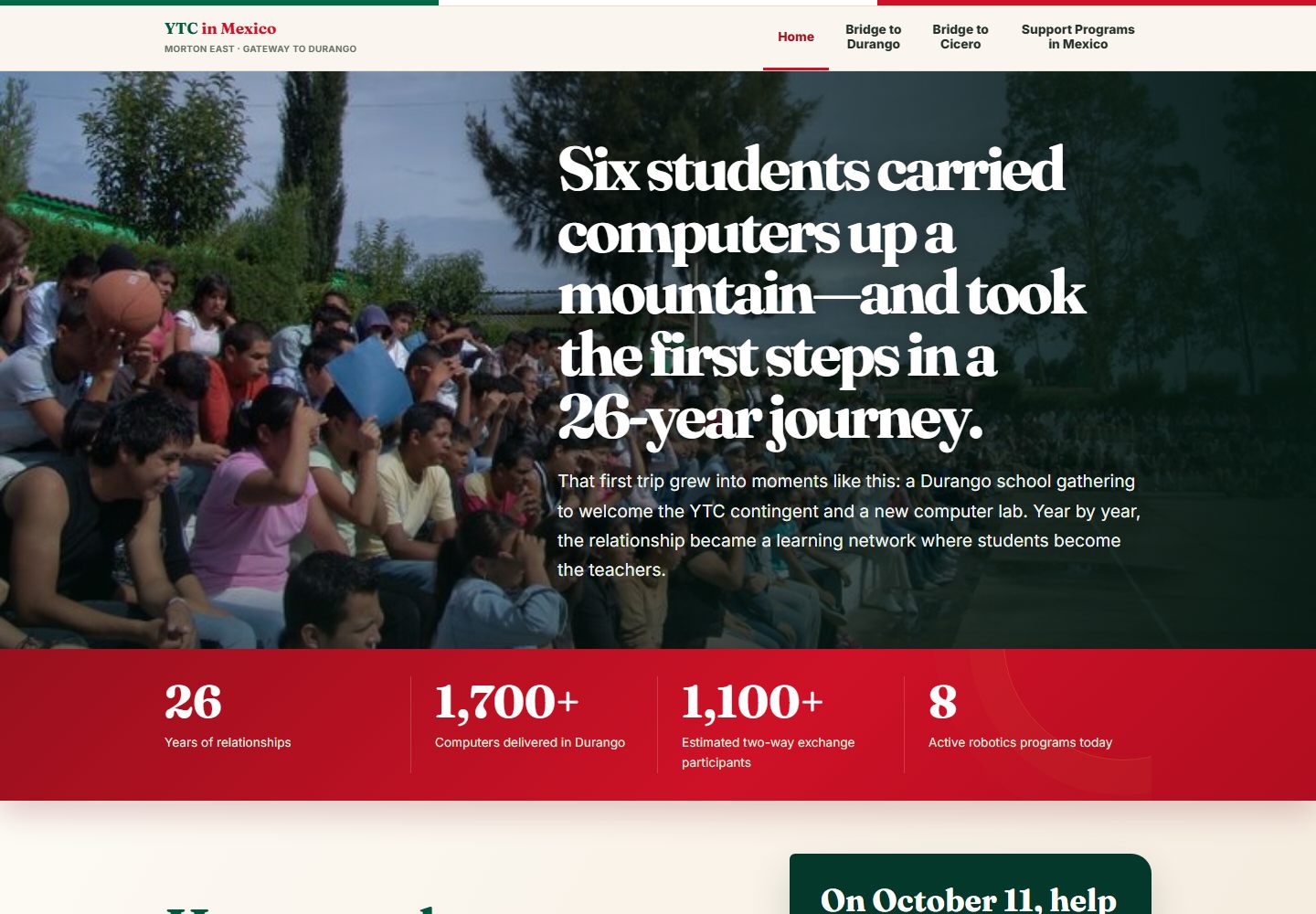
Cicero families helped Morton students bring refurbished computers to relatives and schools in Durango. Community need, family ties and student service created the first bridge.
 Youth Technology Corps
Cicero ↔ Durango · since 2000
Computers became classes. Classes became exchanges. Exchanges created the trust that later made virtual robotics and locally led expansion possible.
The relationship before the network
Cicero families helped Morton students bring refurbished computers to relatives and schools in Durango. Community need, family ties and student service created the first bridge.
Mexican students and teachers began traveling to Chicago. Host families and schools turned a donation relationship into an educational and cultural exchange.
Morton students taught introductory Arduino robotics in Spanish to peers in Durango through synchronous virtual sessions—years before remote instruction became ordinary.
A U.S. Embassy award tested whether the model could move from two programs to a larger, locally coordinated network across four Mexican states.
What the first expansion proved
The 2024–2026 award expanded YTC’s work from two original programs to nine grant-program sites across four states and recorded 243 participants. Eight sites continued through the full reporting period; together with 16 secondary locations, the network reached 24 locations in all. Seven of those eight continuing sites improved average evaluation scores, attendance rose at seven, and female participation grew from 37% to 52%.
The more important evidence is what students did with responsibility: they competed, adapted and translated learning materials for their communities, built responses to local problems and began moving toward teaching roles.
What the award could not create in fifteen months was twenty-six years of trust. Future scale depends on preserving local ownership, evidence standards and the culture that turns a class into a community.
Local leadership
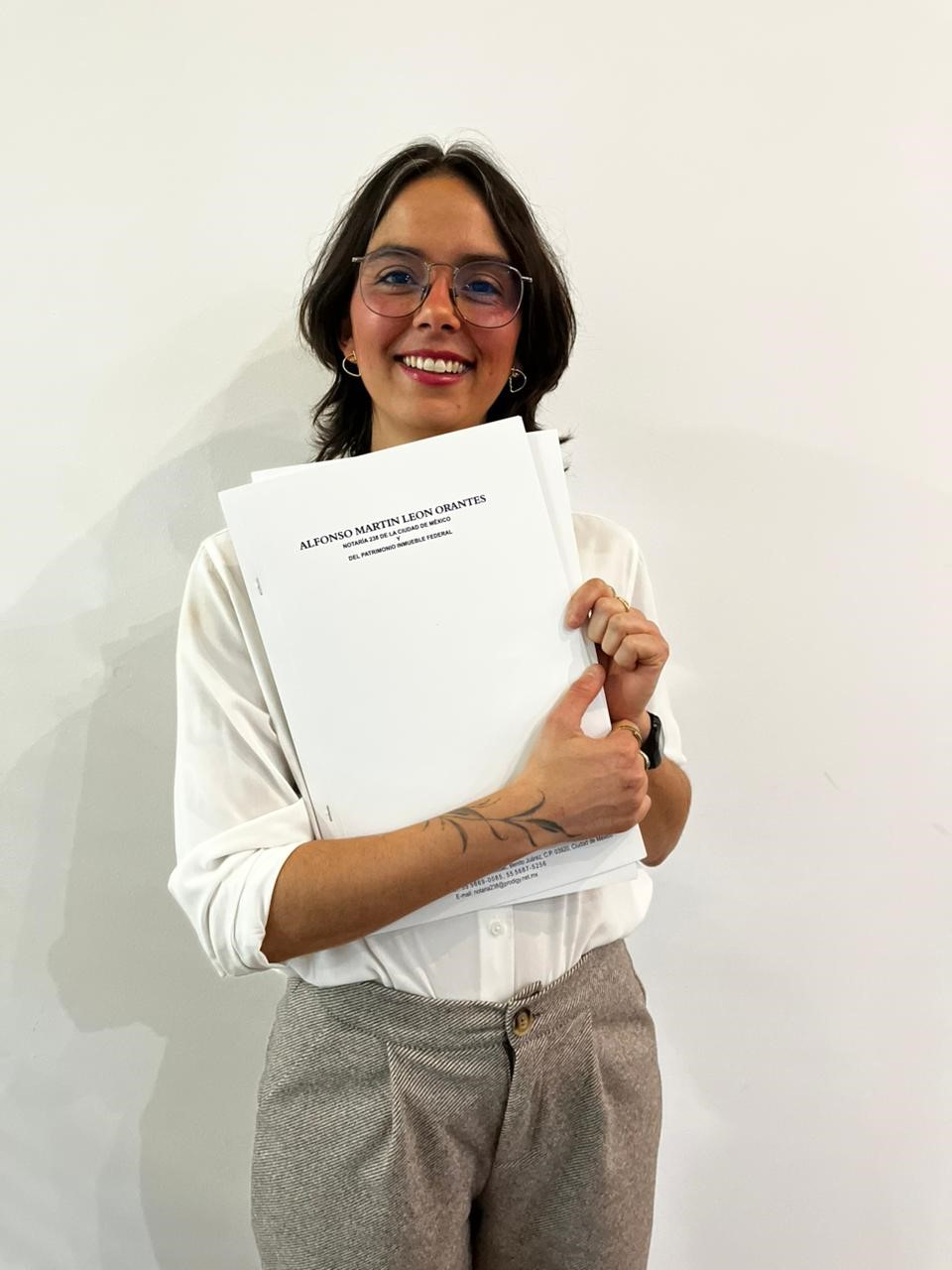
Andrea arrived in Chicago through the IREX Community Solutions Program with years of work in urban, rural and Indigenous communities. She recognized that YTC’s student-to-teacher method could expand access while building local capacity.
As Executive Director of YTC Mexico, she helped coordinate growth, strengthen program quality and establish YTC’s nonprofit footing in Mexico. The next phase is designed around the same principle: Mexican institutions and young people become the owners and teachers of the work.
The next phase · pending support
Build the network with us
Give your expertise, your time or your financial support. Help local leaders and student teachers connect the next classroom to the YTC network.
Underwrite curriculum, technology, communications and core capacity.
Bring technical, creative, legal, fundraising or operational expertise.
Join the board or an advisory group prepared to govern responsible growth.
Contribute as an intern while building a portfolio of meaningful work.
Connect a college, university or employer to mentoring and applied projects.